
Influencer Marketing vs. Brand Communities: What Builds Long-Term Trust?
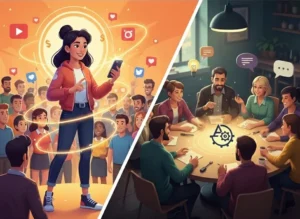
In the digital age, trust has become the most valuable currency in marketing. Consumers are more skeptical than ever of traditional advertising, pushing brands to explore new ways to connect authentically with their audiences. As any digital marketing expert will tell you, two strategies dominate this conversation today: influencer marketing and brand communities.
Both approaches can drive engagement and growth—but when it comes to long-term trust, which one truly delivers?
Understanding Influencer Marketing
Influencer marketing leverages the credibility and reach of individuals who have built loyal followings on platforms like Instagram, YouTube, TikTok, and LinkedIn. When influencers recommend a product, it often feels more personal and relatable than a traditional advertisement.
From the perspective of a digital marketing strategist, influencer marketing is a powerful tool for visibility and momentum—especially in competitive markets.
Strengths of Influencer Marketing
Instant reach: Immediate access to niche and highly targeted audiences
Social proof: Recommendations feel authentic when aligned with the influencer’s personal brand
High engagement: Influencer content often outperforms brand-owned content
Fast results: Ideal for product launches, promotions, and short-term campaigns
Limitations of Influencer Marketing
Despite its effectiveness, influencer marketing faces growing challenges—something every certified digital marketer must account for in long-term strategy:
Trust fatigue: Over-sponsored content can weaken credibility
Borrowed trust: Loyalty belongs to the influencer, not the brand
Short-term impact: Engagement often drops once campaigns end
Brand risk: Influencer controversies can negatively affect brand reputation
Influencer marketing excels at sparking awareness, but sustaining trust over time is significantly harder.
What Are Brand Communities?
Brand communities are groups of customers who connect with each other—and the brand—around shared values, interests, or experiences. These communities may live on social platforms, forums, mobile apps, or private online spaces.
Examples include fitness brands hosting member groups, tech companies running user forums, or lifestyle brands creating exclusive digital hubs.
For the best digital marketer, brand communities represent relationship-building at scale.
Strengths of Brand Communities
Deeper emotional connection: Members feel a genuine sense of belonging
Two-way engagement: Brands listen, learn, and evolve with their audience
Long-term loyalty: Communities encourage repeat purchases and advocacy
User-generated trust: Real customer experiences carry more credibility than ads
Brand communities turn customers into participants—not just consumers.
Trust: Short-Term Influence vs Long-Term Relationships
The core difference between influencer marketing and brand communities lies in who owns the trust.
Influencer marketing depends on external voices. Trust is essentially rented. Brand communities, however, create internal ecosystems where trust grows organically over time.
Influencers may introduce a brand, but communities keep customers engaged long after the first purchase—an insight every experienced digital marketing strategist understands.
Scalability vs Sustainability
Influencer marketing scales fast. A single post can reach millions overnight, but maintaining visibility requires continuous investment.
Brand communities grow more slowly, yet they are far more sustainable. Each new member strengthens the ecosystem, increasing engagement, loyalty, and lifetime value.
From a long-term perspective, communities often outperform influencer campaigns—despite slower initial growth.
The Most Effective Strategy: Combining Both
The smartest brands don’t choose one—they combine both.
A certified digital marketer’s approach looks like this:
Use influencers to attract attention and awareness
Convert engaged audiences into community members
Nurture trust through ongoing interaction, shared values, and meaningful experiences.
In this model, influencers are the door, but the community is the home.
The Evolving Role of Marketers
Modern marketers are shifting from campaign-focused thinking to relationship-driven strategy. Success is no longer measured solely by impressions or clicks, but by:
Retention
Advocacy
Brand sentiment
Customer lifetime value
This evolution favors trust-first strategies—an approach embraced by every leading digital marketing expert.
Conclusion
Influencer marketing and brand communities both play important roles in digital marketing, but they serve different purposes.
Influencer marketing excels at visibility and short-term momentum
Brand communities excel at trust, loyalty, and long-term growth
For brands aiming to build lasting relationships—not just fleeting attention—the future belongs to those who invest in community-driven trust.
Author Info
Ayana Sandeep , best digital marketing expert & freelance digital marketer in Calicut
learner from CDA Academy.